DevOps as a term has been around long enough that it has accumulated muddy meanings. By 2026, the actual practices that mature engineering organizations run have converged. The slide-deck era — where DevOps consulting was about transformation roadmaps drawn from Gartner reports — has moved to a smaller corner of the industry. What’s left is engineering-grade practice, with measurable outcomes.
What DevOps actually is in 2026
Three working definitions, in increasing order of usefulness:
DevOps as a culture. Product teams own their software end-to-end, including production operations. The cultural premise is the unit; tooling supports it. (Useful for setting expectations; not useful for building anything.)
DevOps as a tooling stack. CI/CD, IaC, observability, secrets management. (Useful for procurement; misses the cultural and architectural pieces that make tooling effective.)
DevOps as integrated engineering practice. Cultural premise + tooling + platform support + reliability discipline + organizational structure. (This is what we engineer in customer engagements.)
The mature practitioner thinks in version 3. We do too.
The eight practices that compound
After running DevOps engagements across service providers, regulated enterprises, AI operators, and telecom operators, eight practices reliably show up as the levers that compound returns. Here’s each, in approximate order of foundational importance.
Practice 1: Everything-as-code
All infrastructure, configuration, and operational logic in version control. No clicky-clicky in cloud consoles for production changes. No SSH-ing into machines to fix things permanently.
The discipline:
- IaC for cloud infrastructure (Terraform / OpenTofu / Crossplane)
- GitOps for Kubernetes (Argo CD or Flux)
- Configuration-as-code for application config
- Policy-as-code for security and compliance (OPA / Kyverno)
- Drift detection and self-healing where possible
Returns: change auditability, rollback discipline, reduced operational variance.
Practice 2: Trunk-based development with continuous deployment
Short-lived branches; mainline always deployable; production deploys multiple times per day per service. Long-lived feature branches and quarterly releases are operational debt disguised as a process.
The discipline:
- Small commits, frequently merged
- Feature flags for incomplete features
- Automated tests at every stage
- Continuous deployment to non-prod automatically
- Automated promotion to prod with human gate where needed
Returns: faster feedback, smaller blast radius per change, dramatically reduced incident rate.
Practice 3: Observability over monitoring
Monitoring tells you what you decided to look at; observability lets you ask new questions of your system after the fact. The 2026 standard is logs + metrics + traces, with high cardinality, queryable in production.
The discipline:
- VictoriaMetrics + VictoriaLogs (open-source, low-overhead) or Prometheus + Loki, or commercial (with sovereignty-conscious data-residency)
- Auto-instrumentation where supported (OpenTelemetry)
- SLOs defined per service, with error budgets
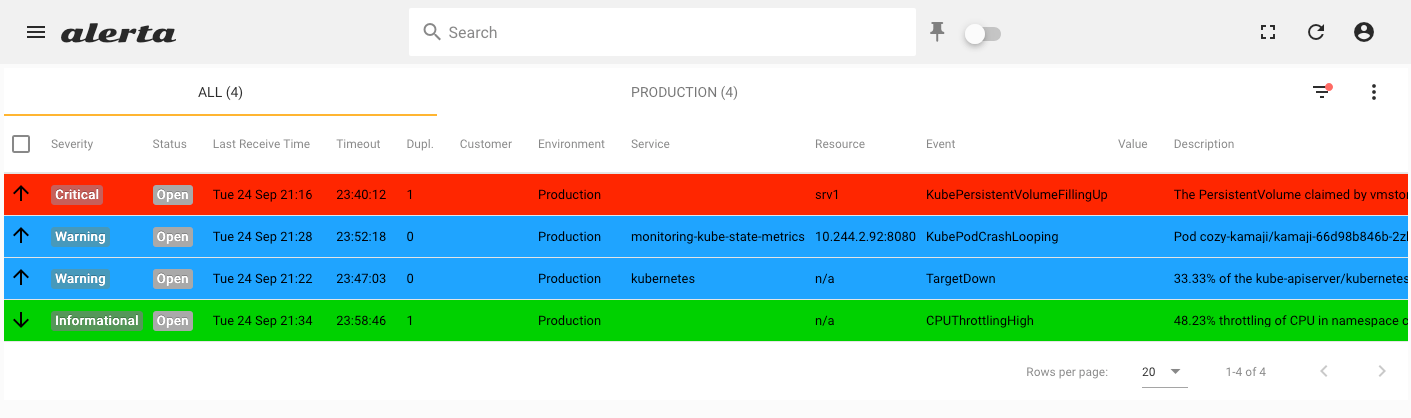
- Alert hygiene as a recurring task — alert fatigue is operational debt
Returns: faster incident diagnosis, capacity planning grounded in data, SLO discipline.
Practice 4: SRE practices — SLOs, error budgets, incident response
The Google SRE book (2016) and SRE Workbook (2018) remain the operational reference. The 2026 reality: SRE practices are widely adopted but inconsistently. Most organizations have SLOs in some places and incident response in others; the mature ones have both as a coherent system.
The discipline:
- SLOs defined collaboratively with product teams
- Error budgets that affect prioritization decisions
- Blameless post-mortems with documented action items
- Incident response with clear roles (incident commander, scribe, communicator)
- Capacity planning informed by SLO trajectory
Returns: production reliability becomes a system rather than a habit; risk is managed, not avoided.
Practice 5: Security as a parallel discipline
Security shifted left for a decade; the current state is “security shifted everywhere.” Not a separate gate at the end; not just at design time; integrated through the lifecycle.
The discipline:
- SAST / DAST in CI
- Container scanning + SBOM
- Secrets scanning in code
- Policy-as-code for runtime (OPA / Kyverno / Gatekeeper)
- Workload identity (SPIFFE/SPIRE) for service-to-service auth
- Supply-chain security (Sigstore, in-toto attestations)
Returns: security debt that doesn’t compound; regulator dialog easier; production posture visible.
Practice 6: Platform engineering as the substrate
DevOps within product teams scales linearly with team count. Platform engineering compounds it sublinearly: shared platform, shared golden paths, product teams ship faster on common substrate.
The discipline:
- Internal developer platform with golden paths
- Self-service primitives for environment provisioning, deployment, observability
- Platform team with product-engineering customers
- Time-to-environment as a measurable platform metric
Returns: linear-to-sublinear scaling of platform investment; product team velocity compounds.
(For depth see Platform engineering vs DevOps vs SRE.)
Practice 7: FinOps integrated, not bolted on
Cost as a non-functional requirement, present at architecture review and continuous in production. Not a quarterly fire drill.
The discipline:
- Cost attribution per team / namespace / workload
- Budget gates in CI/CD pipelines
- Cost shown in deployment dashboards
- Quarterly cost review at platform-team level
- Repatriation evaluation as a permanent function, not a project
Returns: cost trajectory predictable; FinOps doesn’t become an emergency.
Practice 8: Continuous improvement as a function
DORA metrics (deployment frequency, lead time, change-failure rate, time-to-restore). Tracked, reviewed, used to drive prioritization.
The discipline:
- Metrics dashboard visible to engineering leadership
- Quarterly retrospective at organization level
- Improvements tied to measurable outcomes
- Maturity assessment annually (internal or external)
Returns: improvement that compounds rather than oscillates with leadership attention.
What’s still contested
A few practices that mature organizations disagree on:
- Mono-repo vs poly-repo. Both work at scale. The decision is downstream of organizational structure and tooling choices.
- Centralized SRE vs embedded SRE. Both work. Centralized scales reliability discipline; embedded keeps SREs close to product context.
- Internal portal (Backstage, Port) vs IaC-first DX. Both work. Backstage is great when catalog discipline is mature; IaC-first is simpler for smaller orgs.
- Build vs buy on observability. Open-source self-hosted vs commercial SaaS. Sovereignty concerns are pushing more organizations toward self-hosted.
- Kubernetes everywhere vs Kubernetes for some workloads. Both work. The question is whether the workload mix justifies the platform investment.
These are real architecture decisions, not best-practice settled answers.
Common failure modes
Tool-driven “DevOps”
Buying Jenkins, Datadog, and Argo and calling that DevOps. Tools without practices become operational debt.
Big-Bang transformation
“Year-long DevOps transformation” that delivers nothing measurable for 6+ months. Effective transformation runs in 4-week increments with named outcomes.
DevOps without organizational change
Trying to instill DevOps practice in product teams without changing reporting lines, on-call ownership, or incentive structure. Practices erode under the previous incentives.
Senior partner / junior delivery
Big-4 pattern: senior partner sells, junior consultants deliver. The customer pays senior rates for junior outputs.
No knowledge transfer
Engagement ends, consultants leave, customer team can’t operate what was built. Dependency on follow-on engagement.
Maturity progression
A practical 5-stage maturity model:
- Pre-DevOps — Dev throws over the wall, Ops catches. Manual everything. (Disappearing in 2026 but not extinct.)
- Tool-driven DevOps — CI/CD installed, IaC partially. Practices uneven.
- Practiced DevOps — Trunk-based development, automated deploys, basic observability, SRE practices in some teams.
- Platform-supported DevOps — Internal developer platform with golden paths; SRE practices systemic; FinOps integrated.
- Mature platform engineering — Platform is a coherent product; DevOps and SRE practices baked in; continuous improvement as a function.
Most organizations sit at stage 2 or 3. Moving to stage 4 is the work that compounds returns.
How to assess where you are
Annual external assessment is worth doing if your organization has more than ~50 engineers. The honest reasons:
- Internal teams underestimate their own technical debt (familiarity bias)
- Industry standard is moving; what was best practice 3 years ago may not be now
- Board / leadership benefits from independent perspective
- Platform investment decisions need a defensible data point
Ænix runs this as a Platform Readiness Assessment with DevOps maturity workstream emphasized. The output is a written report that names, per practice, where you stand and where the leverage is.
Want to dig deeper?
- DevOps consulting services — engagement details
- Platform engineering services — when DevOps reaches platform stage
- Platform engineering vs DevOps vs SRE — terminology
- Cozystack — open-source platform foundation
Test yourself: DevOps practices in 2026
5 questions · ~2 min